Thrive
Thrive is an AI-powered mental wellness companion designed to make emotional support more accessible, personalized, and stigma-free.
The application helps users build healthier mental well-being habits through intelligent conversations, guided journaling, mood tracking, mindfulness exercises, and personalized recommendations that adapt to their emotional state over time
Role :
UI/UX Designer
Duration :
3 Months
Industry :
The Idea :
Mental-health support can be difficult to approach.
People may hesitate to seek help because of stigma, previous experiences with mental-health services, cost, availability, or simply because traditional support does not fit into their everyday lives.
Thrive explored a different question:
The result was a mobile product concept combining an AI-based therapy experience with wellbeing resources, mood tracking and community support.
Opportunity :
Research suggested that mental wellbeing is not a single, consistent need.
People experience different emotional states and require different types of support depending on context. This created a broader opportunity:
"Design a wellbeing experience that adapts to different emotional needs"
Thrive was structured around four core areas:
Talk
AI-supported conversations
Explore
Mental-health resources and exercises
Reflect
Mood tracking and insights
Connect
Community and shared experiences
What the research changed
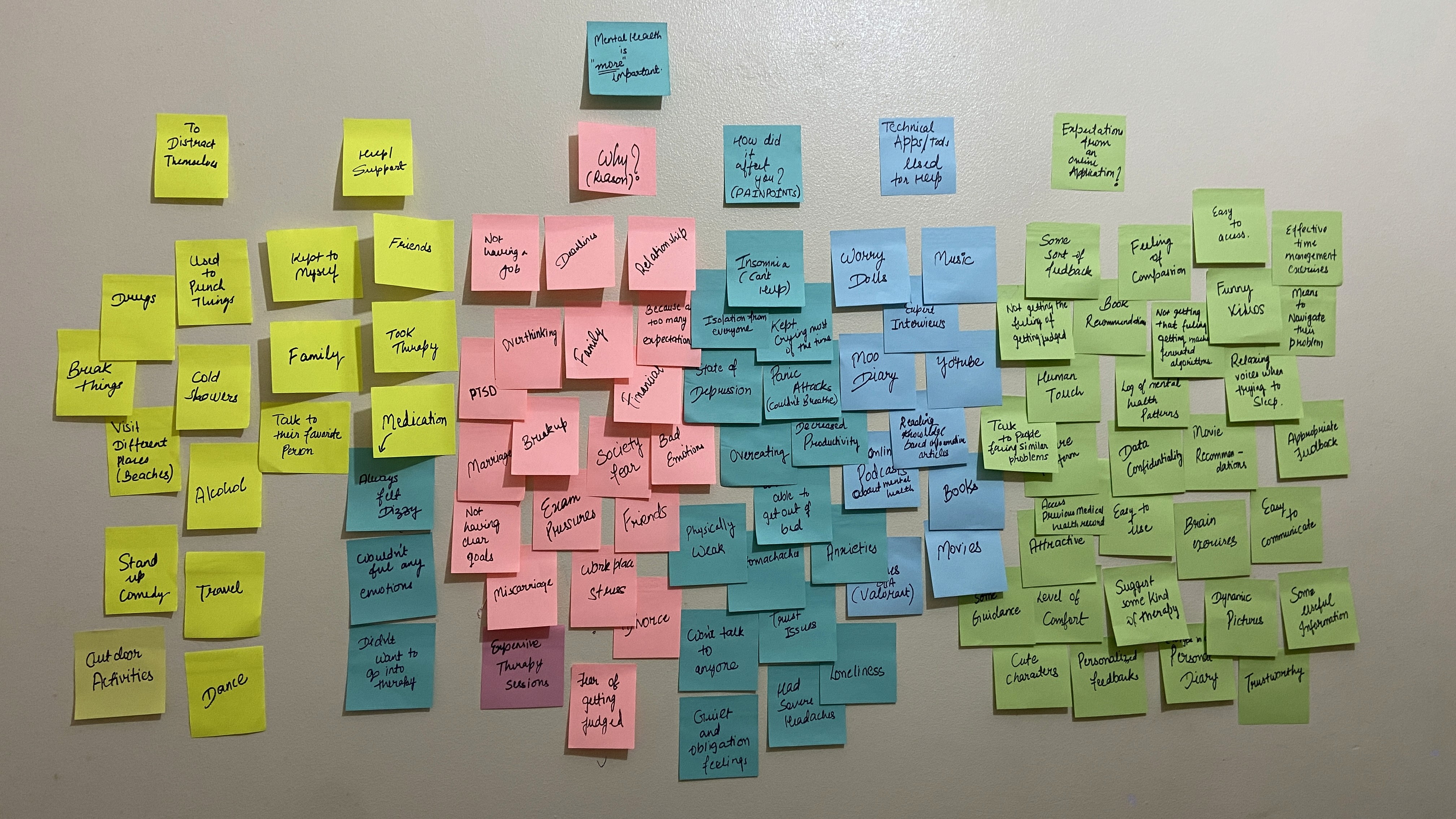
The research combined surveys, interviews, affinity mapping and competitor analysis to understand how people currently engage with mental-health support.
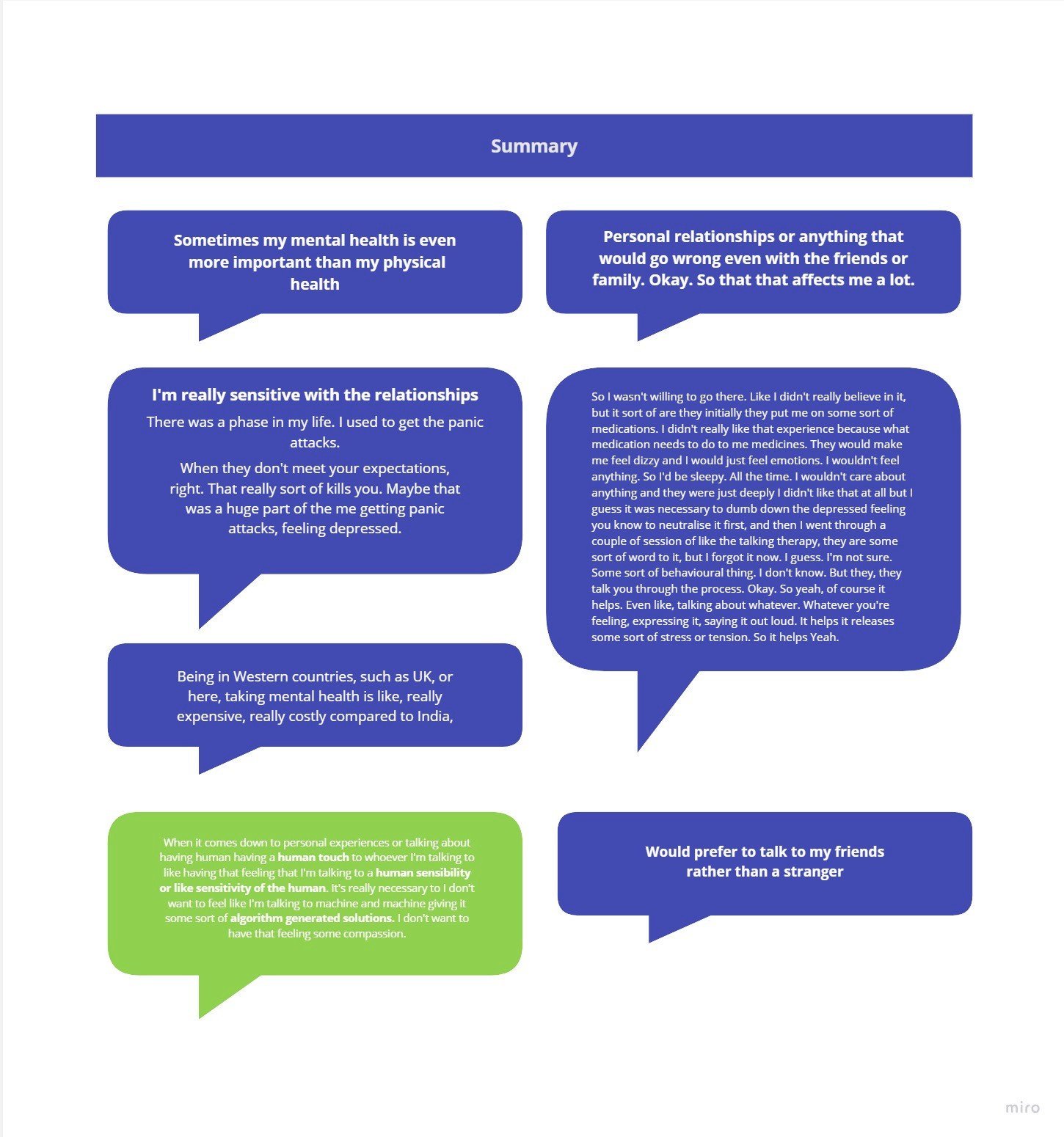


A key insight emerged from interviews:

These findings shaped the direction of the product.
Thrive was not designed around a single form of support, but around the idea that wellbeing is influenced by multiple factors and requires multiple entry points.
Defining the users and their journeys
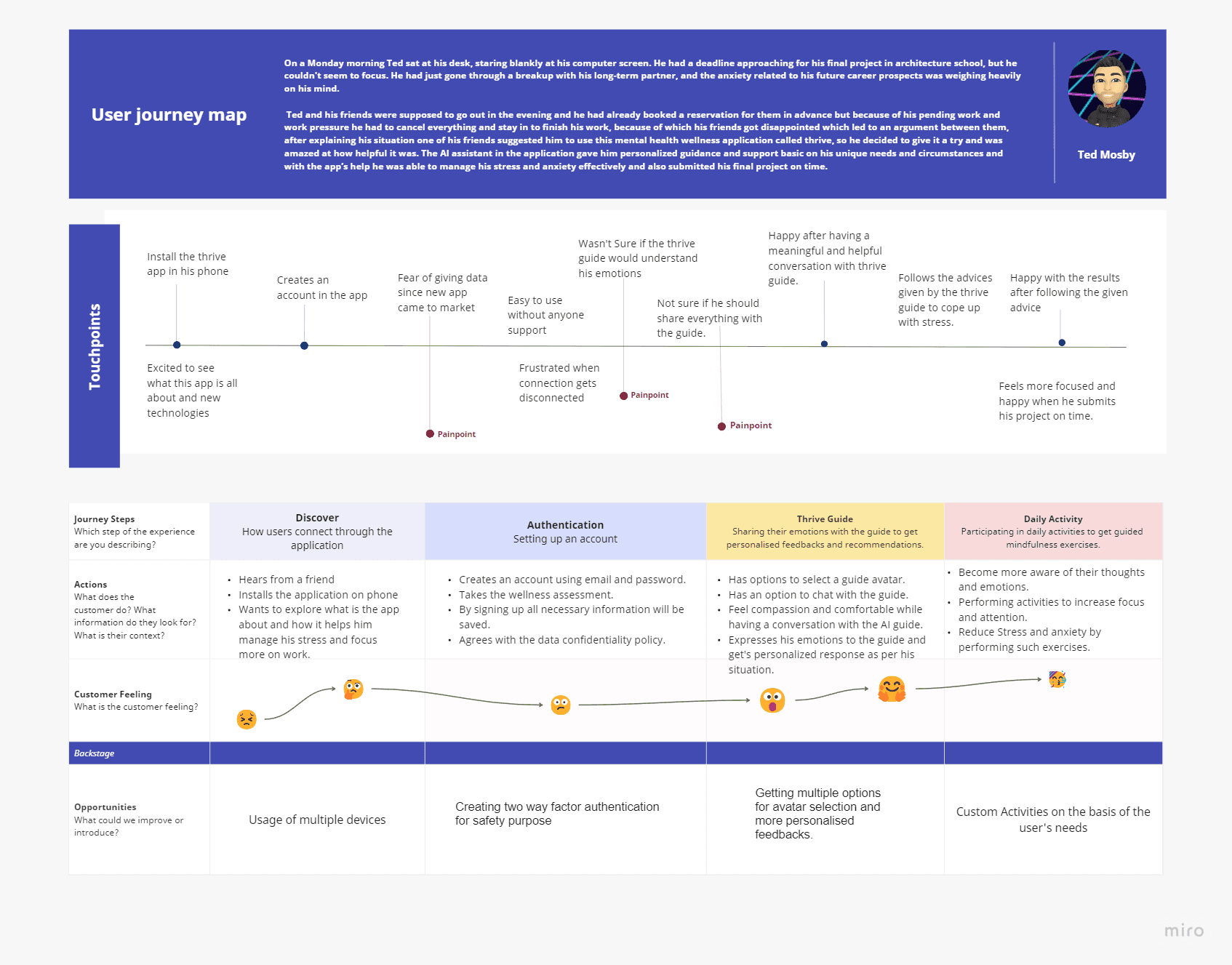
To better understand how different people might engage with Thrive, I created user personas and customer journey maps during the Define stage.
This helped translate research insights into more concrete behavioural patterns and allowed me to design for specific emotional contexts rather than generalised users.
User personas
The personas represented different motivations and emotional states, such as:
users seeking immediate emotional support during moments of stress
users who prefer self-guided reflection over conversation
users who are open to community-based support but hesitant to engage directly
users who want to understand long-term emotional patterns


Customer journey mapping
Each persona was mapped across a typical emotional journey, highlighting:
triggers that lead them to seek support
barriers that prevent engagement
preferred touchpoints within the product
emotional shifts before, during and after interaction

Why this mattered
This stage clarified that users would not approach Thrive in a linear way.
Instead, engagement would be situational and emotionally driven, reinforcing the need for multiple entry points into the experience rather than a single guided flow.
From this, the product direction became more focused on types of support rather than individual features.
Turning findings into product decisions
The research insights were translated into a set of How Might We questions to explore possible directions for the product.
These questions were not treated as solutions, but as a way to define what the product needed to respond to.
They helped clarify:
what problems were worth designing for
what should be prioritised
what should be excluded from the initial concept

From this, the product direction became more focused on types of support rather than individual features.
From possibilities to priorities
A wide range of ideas was generated during early ideation to explore different ways the product could respond to user needs.

These ideas were then evaluated using a NUF framework (Novelty, Usefulness, Feasibility) to identify which concepts were most appropriate for a realistic product direction.

The outcome of this stage was not the framework itself, but the decision to narrow the concept into a structured wellbeing system.


The final product direction :
AI Therapy
Conversational support
Resources
Educational and calming content
Community
Shared experiences and connection
Reflection
Mood tracking and insights
Defining the experience
Once the core structure was defined, early prototypes were created to understand how the different parts of the experience would work together.


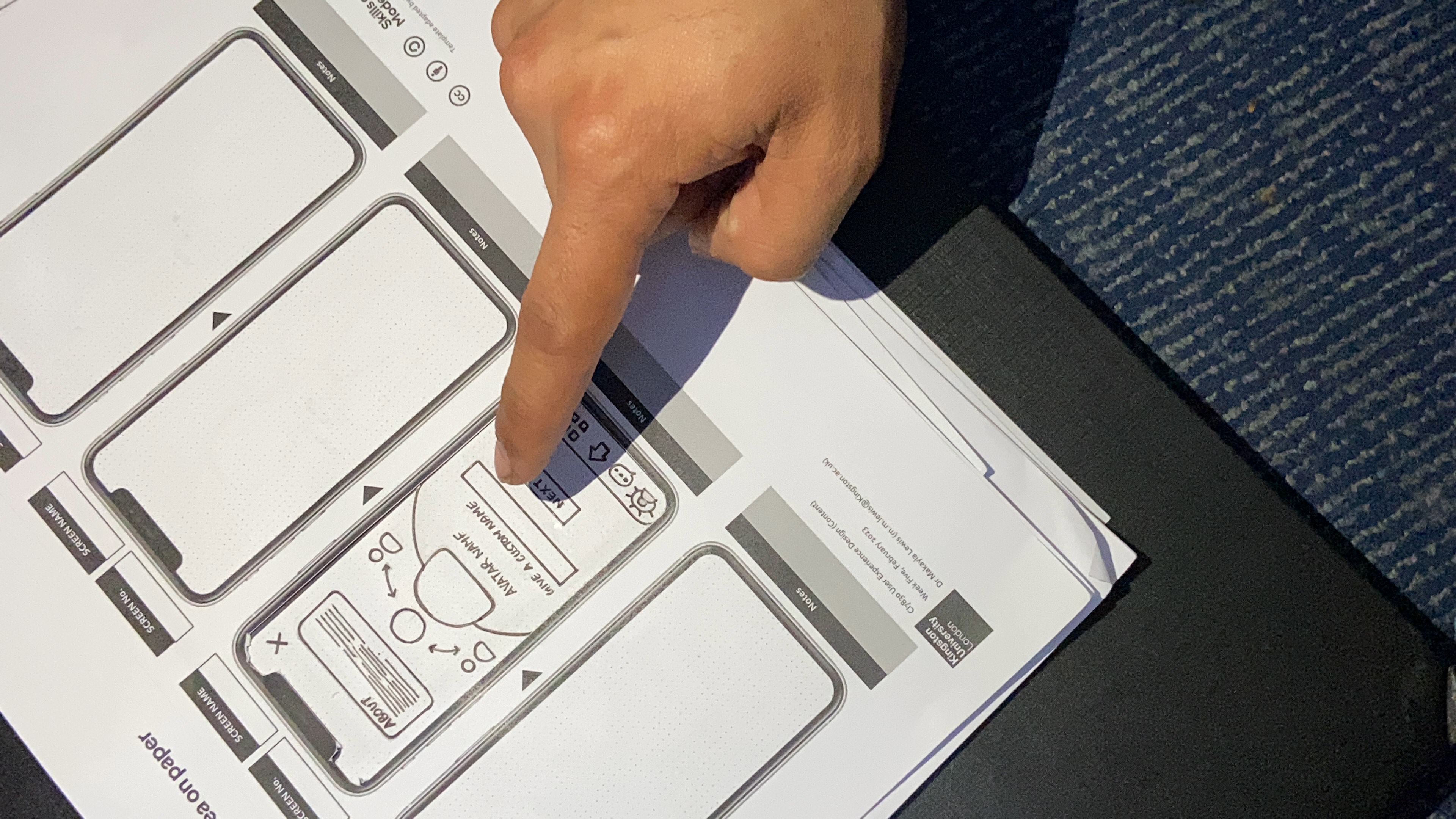


At this stage, the focus was not visual design, but whether the structure made sense as a complete system.
The first validation loop
Early testing showed that the overall structure was understandable, but two areas needed refinement:
Choosing a therapist
Users needed more context before selecting an AI therapist.
Understanding Personal Insights
The way mood data was presented was not immediately clear.
These findings informed changes to both structure and interaction design.
From feedback to structure
The feedback highlighted a broader question:
This led to refinements in the information architecture to better connect therapy, reflection, resources and community.

Designing the product
With the structure defined, the experience was developed into mid-fidelity designs to explore interaction flow in more detail.

A visual direction was then established to support clarity and emotional tone.

The final product
The final experience brings together four interconnected areas of support.
Onboarding
The onboarding introduces the purpose of Thrive and sets expectations for the experience.
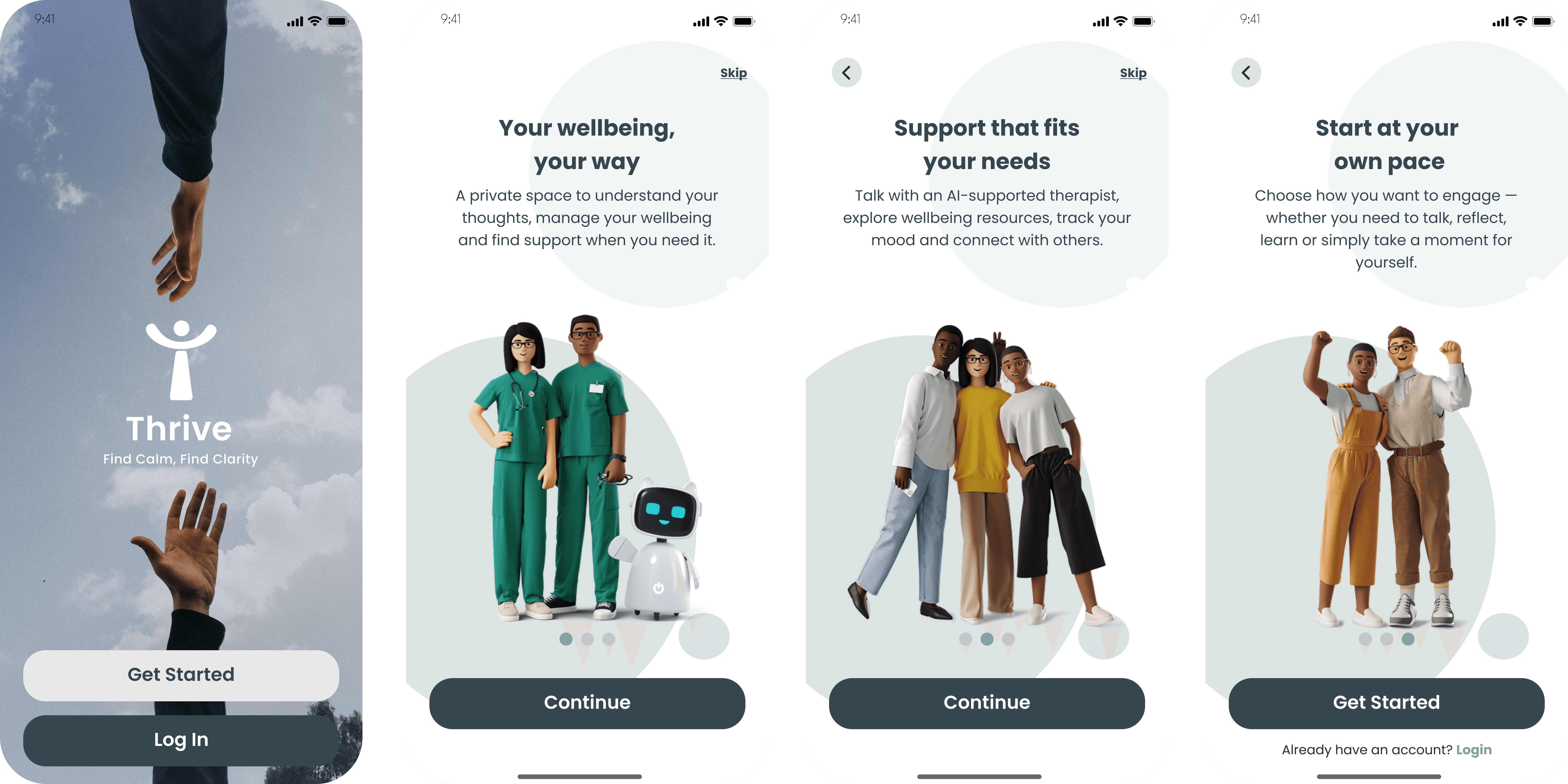
A central home experience
The home screen acts as the entry point into Thrive's different support options.

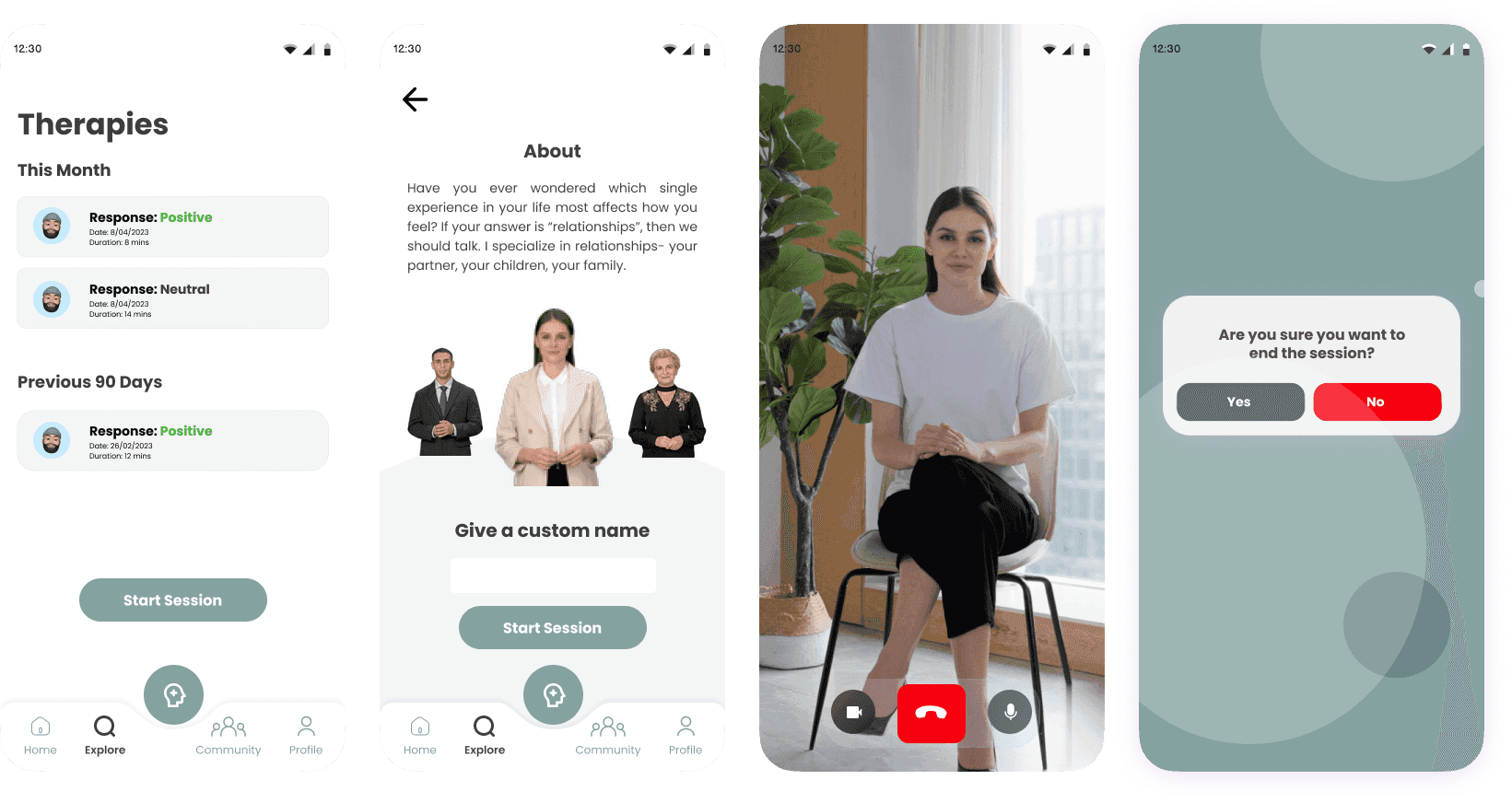
AI-supported therapy
The AI therapy experience is the primary conversational element of Thrive.
Users can select a therapist persona and begin a guided conversation.
Resources when users don't need a conversation
The resources experience provides access to mental-health articles, relaxation exercises and soothing music. This gives users another way to engage with the product without committing to a therapy session.

A space for connection
The community experience allows users to share stories, thoughts and feelings with others.

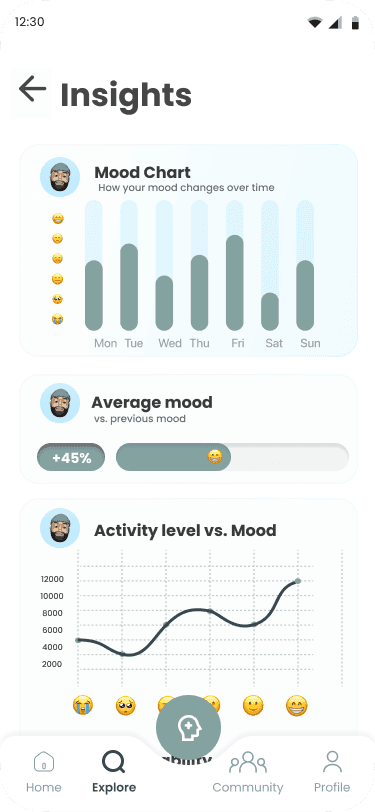
Mood Tracking
Mood tracking and insights help users understand emotional patterns over time which supports ongoing self-awareness rather than one-off interaction.
Prototype Testing
During this phase, 5-act interviews were conducted to test the high-fidelity prototypes to evaluate these prototypes and iterate the designs in accordance with the user feedback.
In this step, the users were welcomed and then requested to complete a set of tasks after being made comfortble. After completing these tasks, further open ended questions were asked based on their feedback to gain a deeper understanding of their needs. Following these interviews, all of the important key points and highlights were accessed, and the prototype was then revised in accordance with the user feedback.

Iteration: improving therapist selection
Testing revealed that users needed more context when choosing between therapist personas.
The updated version introduced clearer descriptions and additional information to support decision-making.

Making therapy history easier to understand
Users were confused by some of the terminology used within the therapy-history experience.
Rather than introducing more explanation, the terminology itself was simplified and the flow was reconsidered.

Outcome
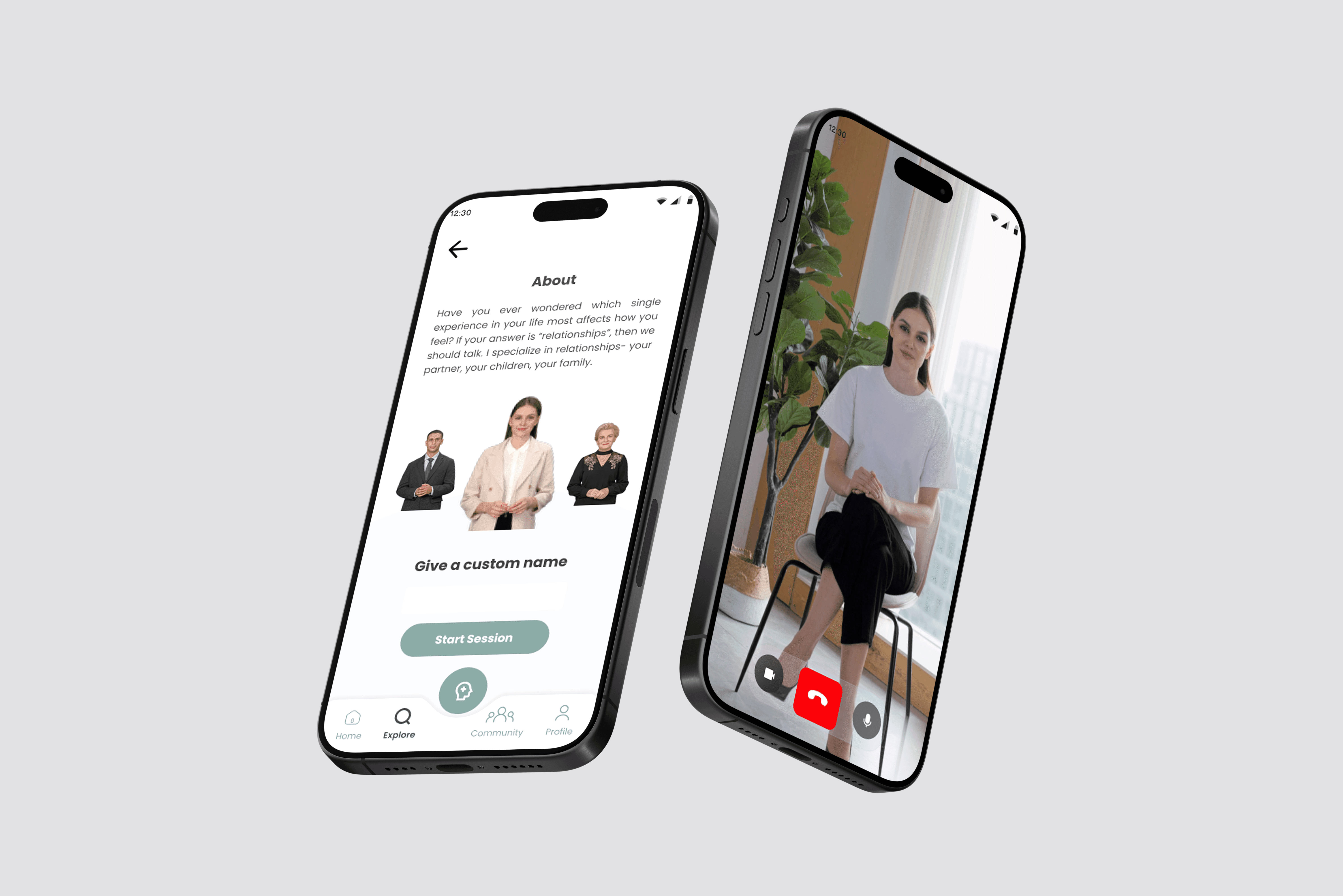
Thrive resulted in a high-fidelity concept exploring how AI-supported wellbeing tools can sit alongside other forms of mental-health engagement.
The project demonstrates a structured approach to designing a multi-layered wellbeing system, where research, prioritisation and testing directly influenced the final experience.
Takeaways
This project reinforced the importance of connecting research directly to product decisions, rather than treating it as a separate phase.
The strongest outcomes came from translating insights into clear design direction and refining them through testing.
If I were to extend this work further, the next stage would focus less on features and more on responsibility and safety in AI-supported mental-health systems.
Key questions for future exploration :
At what point should AI-supported therapy escalate to human intervention?
How should different levels of support be structured within the AI experience itself?
How can the system detect signs of self-harm or crisis in a responsible and reliable way?
What ethical boundaries should define what the AI is allowed to respond to?
How do we ensure users are not over-reliant on AI for critical emotional support?
These questions would be essential before considering real-world deployment.